By
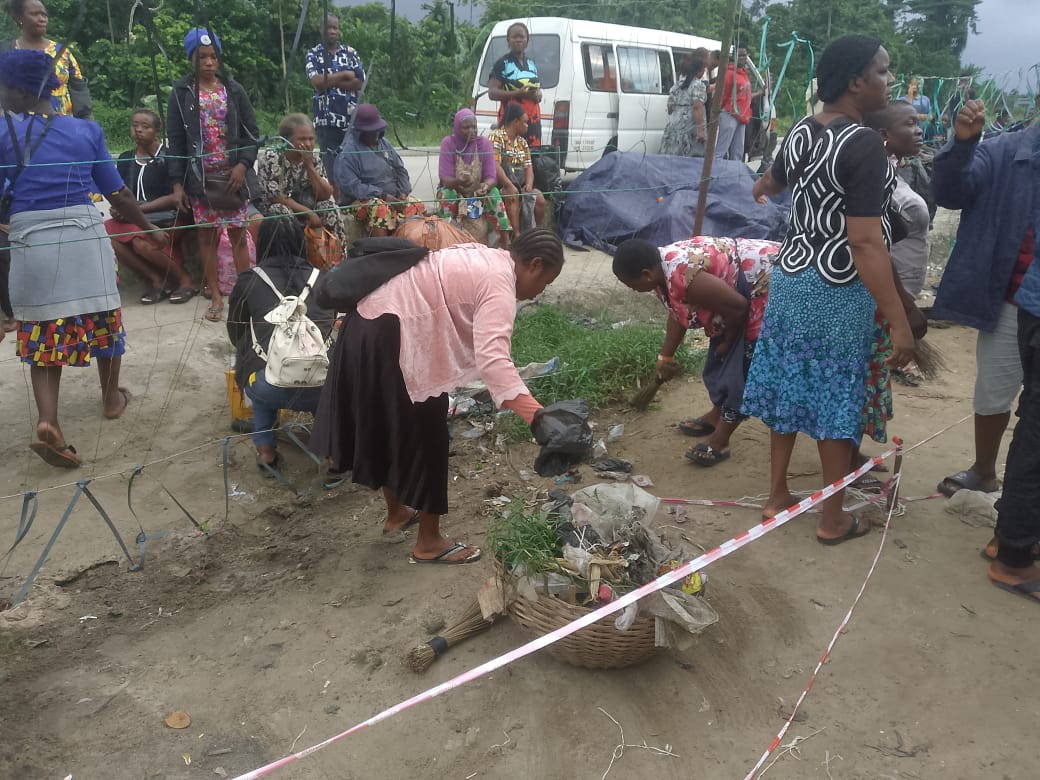
On Thursday, 14 August 2025, the Finima Youth Congress (FYC) Environmental Committee led a sanitation exercise at Agaja Market. The clean-up ran from 8:00 a.m. to 10:00 a.m., and traders and volunteers worked together to clean the market. The Finima Media Bureau reported it as an example of the community’s ability to organise itself and of its commitment to public health through collective work.
Traders take the lead
Market women took part with enthusiasm. Working under their own leaders, they cleared refuse, swept stalls and rearranged trading areas. They also cleared debris from drainage channels and made sure waste was collected in an orderly way. The report describes the clean-up as a communal duty rather than an imposition, and says the traders were proud of the results.
Many traders said the cleaner stalls would probably attract more customers and make shopping more pleasant. The report says the event showed how quickly community members invest their time in shared spaces when they have organisation and support.
The traders also pledged to keep the market clean on their own, without outside supervision. The FYC treats that pledge as evidence that a culture of hygiene is taking hold among the traders.
What the traders still need
The traders said the clean-up was not enough on its own. Their main request was for the market’s borehole to be rehabilitated, so that a reliable supply of clean water could be used for handwashing, cleaning utensils and keeping produce fresh. Without it, they said, the standards reached on the day would be hard to keep.
They also asked for working toilet facilities. The report quotes a stall owner who said cleanliness depends on basic amenities as well as sweeping, and that clean water and proper toilets are essential for public health. The traders appealed to the Sole Administrator of Bonny Local Government Area and other stakeholders for immediate action, warning that inadequate sanitation infrastructure could undermine the gains from clean-ups.
The FYC’s plans
Omie D. Brown, Public Relations Officer of the FYC Environmental Committee, said the organisation aims to instil a culture of environmental responsibility that lasts for generations. She described the traders’ pledge as a sign that this shift is happening. The FYC’s strategy includes regular market sanitation exercises, community clean-up campaigns and educational outreach.
Brown said the FYC’s role is to catalyse and support community initiatives, not to replace them. The organisation aims to build local capacity for environmental care through training, resource sharing and advocacy. The report presents the Agaja Market exercise as a model for other Niger Delta communities.
Brown acknowledged that lasting results need investment and collaboration, particularly to close infrastructure gaps that community effort alone cannot fill.
Next steps
The report concludes that the clean-up showed community agency and a shared vision for a cleaner Finima. It sets a practical test: local authorities and stakeholders should respond to the traders’ request for clean water and proper sanitation facilities. The report says that doing so would support community self-help, protect the gains from this exercise and strengthen trust between residents and local government.
Source: Original report: Finima Media Bureau, finima.net, 14 August 2025. Read the original on finima.net.
What do you feel about this post?

Like

Love

Happy

Haha

Sad